Malaysian sovereign investor Khazanah Nasional has redefined its investment strategy through a RM6 billion (around $1.5 billion), five-year mandate launched in 2022, designed to build resilient domestic venture, mid-market, and semiconductor/advanced manufacturing ecosystems.
The Dana Impak programme has mobilised RM2.6 billion in investments as at Dec 31, 2025, with 48 sen of external capital crowded in for every RM1 invested, according to its report released today. That has in turn supported about 130 firms through investments and ecosystem programmes.
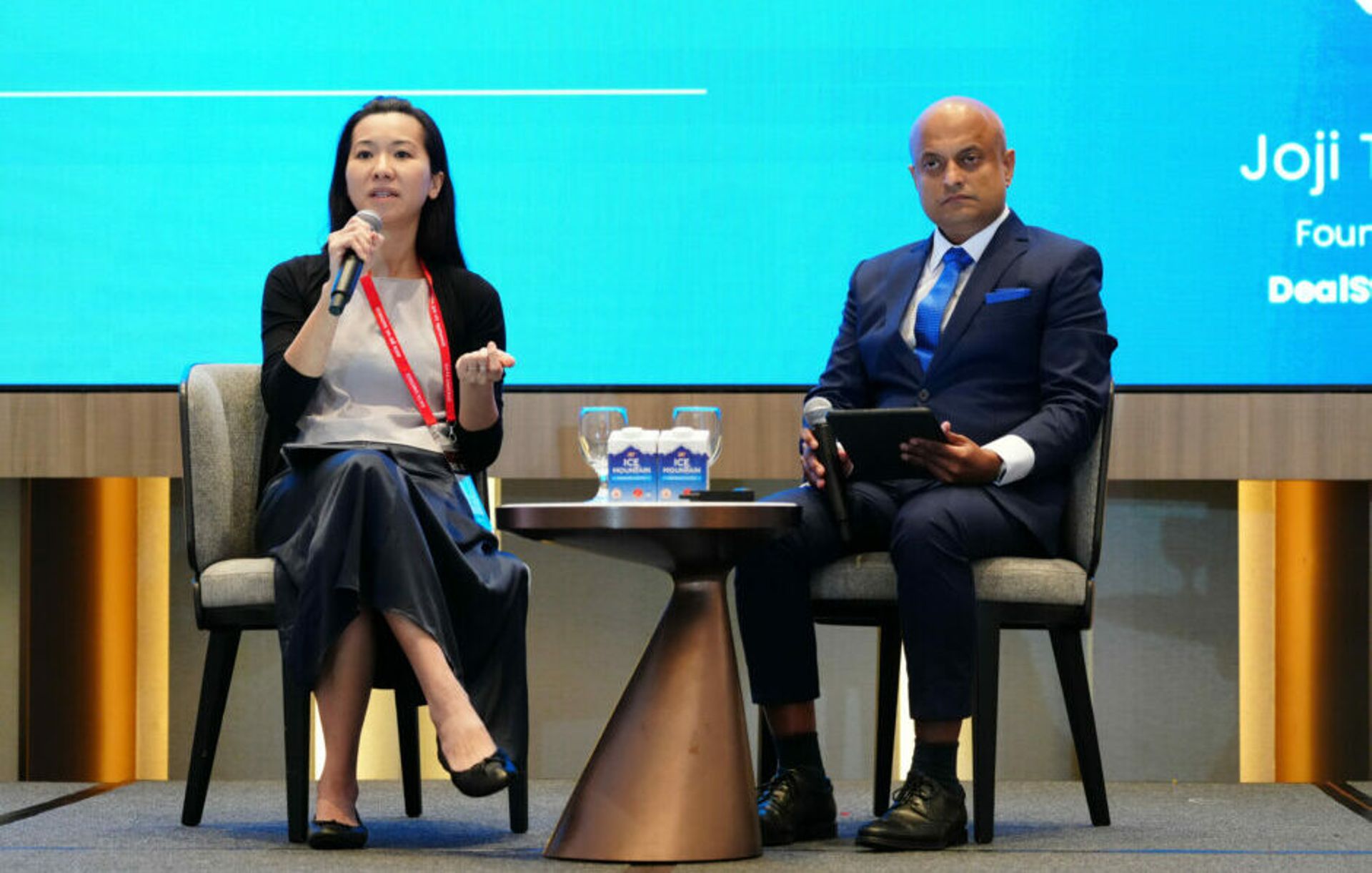
During a fireside chat at DealStreetAsia’s Asia PE-VC Summit 2026 in Singapore recently, the Head of Dana Impak at Khazanah, Kayse Foo, asserted that the institutional investor remains focused on commercial discipline.
“First risk does not mean blind risk for us; we chart it out,” Foo said.
“The gap we want to fill is beyond institutional capital. Our capital comes with more intentional efforts of building talent and ecosystem through partnerships.”
Under Dana Impak, the fund-of-funds Jelawang Capital has backed a broad mix of fund managers, from emerging firms including First Move and Vynn Capital, to established regional platforms Granite Asia and AppWorks.
Edited excerpts of the fireside chat:-
What is one example where Khazanah was prepared to go first when commercial capital was not, and what happened after that?
Khazanah is the strategic investment arm for the government of Malaysia. Dana Impak is part of the investments team of Khazanah. It’s a very new mandate that we set out in 2022, where we say we need to start looking at investing more intentionally in Malaysia, and with that we say that we’ll do it with impact.
What is impact for Khazanah [and] Dana Impak? It is anchored on three core principles: One, are we transforming a Malaysian firm? Two, are we potentially building a Malaysian champion? Three, are we creating or catalysing a certain ecosystem that we truly believe in?
First risk does not mean blind risk for us; we chart it out. When we look at it as a portfolio, we do not just weigh the Malaysian impact and the economic impact. We also need to weigh the financial sustainability of the portfolio.
We do hope that in our efforts of transforming Malaysian firms [and] building champions, we actually can be more intentional about the outcome we get.
We have two strategies that are intentionally more of the ‘first-risk’. One is in the VC and startup ecosystem. That’s when we actually invest in emerging fund managers, or even bring regional fund managers to come and take that first-risk capital, with our capital anchoring it for Malaysia. The second one, where we take more intentional first risk, is in our programme in semiconductor and advanced manufacturing for Malaysia.
We are very intentional in terms of the strategy we build – focused on startups and the mid-market.
What were your learnings from the first set of managers you backed? Where are the real gaps in Malaysia and Southeast Asia’s manager ecosystem?
The gap we want to fill is beyond institutional capital. It’s about being more concerted in our efforts in backing fund managers and supporting startups. Our capital comes with more intentional efforts to build talent and the ecosystem through partnerships.
We have programmes that are more capacity-building for the emerging fund manager.
It is also about how we can leverage the wider Khazanah network, the wider investment portfolio that we have built locally and globally, and intentionally connect them to the fund managers we are backing, to the Malaysian startups and companies that we are supporting and investing in, and create a more whole-nation approach to investing beyond just Khazanah investing directly.
The question is less so about adding more managers; [rather], how do you intentionally make sure that the ecosystem, the companies, the startups, the founders are able to deliver. And with that, in Malaysia, we recognise that our founder base and our startup ecosystem are nascent. Therefore, a little bit more concerted effort is needed beyond capital.
I joined Khazanah in 2006, and we’ve been a very large institutional investor in government-linked companies in Malaysia, restructuring and building them to be more regional. That’s a totally different play versus what we are doing in Dana Impak today.
You are pursuing two models at the same time: Building emerging managers and partnering with much larger regional platforms. How do those two approaches reinforce one another rather than compete for the same capital and companies? Dana Impak is also using private equity and private credit to address the financing gap facing Malaysian mid-tier companies. Why does Khazanah need to solve that gap?
We’re anchored by a programmatic approach to investing; we have three programmes that we have put out there to say that we want to put time, effort, and capital at play. The startup and VC ecosystem is our first and the second is our mid-tier company programme.
If you look at Malaysia, one is familiar with the investible opportunities. At the start – seed, pre-seed, early stage – you don’t see many companies emerging, but at the PE stage, you see a lot of the consumer, healthcare, and education assets – quite ready to be investible. So there’s a clear gap in the startup and VC stage and in the mid-market stage, so our long-term catalytic capital should be put to catalysing these two segments.
The third programme is [for the] semiconductor [sector], and that’s more about catalysing an ecosystem.
In Malaysia, mid-tier companies are a very significant contributor to the economy. They make up about less than 2% of our registered businesses, but about 40% of our GDP and 20% of our employment.
Mid-tier companies in Malaysia are generally profitable. They are exporting companies, usually family-owned, and are what I call the true gems of Malaysia.
It’s quite different from the startups – and sometimes they actually need value-creation support. That’s when we partner with private equity fund managers to invest in mid-tier companies.
But sometimes some of these family-owned mid-tier companies are also very sensitive to equity capital. They do not want dilution. They just need short-term or shorter duration of credit that the bank may not be readily available to lend. That’s when private credit funds [come in].
Malaysia is attracting enormous capital into semiconductors, AI and data centres. But hosting factories, servers and infrastructure isn’t the same as owning the economics around them. Where do you think Malaysian companies need to own more of the value – chip design, IP, suppliers, software, or companies built on top of that infrastructure?
Our approach for our semiconductor programme spans beyond VC investing. It’s also co-investment with partners and direct investments.
Catalysing a sector like semiconductors and advanced manufacturing in Malaysia takes a multi-pronged approach. Malaysia has quite an established base in semiconductors. We’re strong in assembly and test packaging companies that are serving global clients, but it is of lower value. The challenge for Malaysian semiconductor companies is about moving up the value chain and doing higher-value work.
We have quite a unique proposition – not just a cost base, not just the talent pool that we have developed through the MNCs, but also an ecosystem, a local supply chain that’s built quite well around this sector. The question for us as the strategic investment arm for Malaysia: How do we pull in beyond just our capital, working across our sister institutions, to look at this sector and have a more concerted effort in investing, while working with policymakers as well?
For how long will you back a manager? What does a successful manager look like on the day Khazanah is no longer needed as an anchor? Which pools of capital do you most need to see coming behind you: Malaysian institutions, family offices and corporates, other Asian institutions, or global LPs?
We call ourselves catalytic capital. We’re able to weather through beyond the three, four, or five years of exits that typically one would expect. We are reasonable in expecting that managers who are emerging take time to build. We will anchor the first time, second time, and third time fund. Does that mean that after that we stop backing the manager?
Then what we will do is to ask ourselves from a commercial discipline standpoint: Is the fund manager showing progress? Should we continue to support the second fundraise, and when it comes to startups, should we continue to support the follow-on funding?
We were looking at one IC [integrated circuit] design company – SkyeChip. At that time, they were just a 20- or 30-strong engineering firm. We were quite certain that this company had the right founder and the right technical capability, but needed that time and capital to build it up, so we backed it through a few of our VC funds. We invested about 50 million [ringgit] across a few VC funds, and continued to monitor and manage it. [Since then] SkyeChip has been able to IPO, was quite widely oversubscribed, and then a success case was built.
First, we start with impact. Second, we must also look at the commercial discipline of generating a sustainable portfolio for Khazanah. Ultimately, we’re an institutional investor. Having that patient catalytic runway allows us to have that differentiated support needed to drive economic development for the country. But at the end of the day, commercial sustainability still comes back into play.